
What Is the Cost of a Plastic Sheet Extrusion Line in 2026?
When overseas buyers ask us for a quotation, the first question is almost always the same: “How much does a plastic sheet extrusion line cost?”
It sounds simple, but in reality, there is no fixed price.
In Jiaozhou, where many extrusion line manufacturers are based, you can find machines that look similar on the outside but differ significantly in price. The gap is not random. It reflects differences in configuration, material adaptability, and long-term performance.
So instead of giving a single number, it’s more useful to understand what actually drives the cost in 2026—and why two lines can vary so much.
The price range in real projects
Based on what we are building and exporting today, a standard plastic sheet extrusion line in 2026 usually falls somewhere between USD 80,000 and USD 450,000.
That’s a wide range, and for good reason.
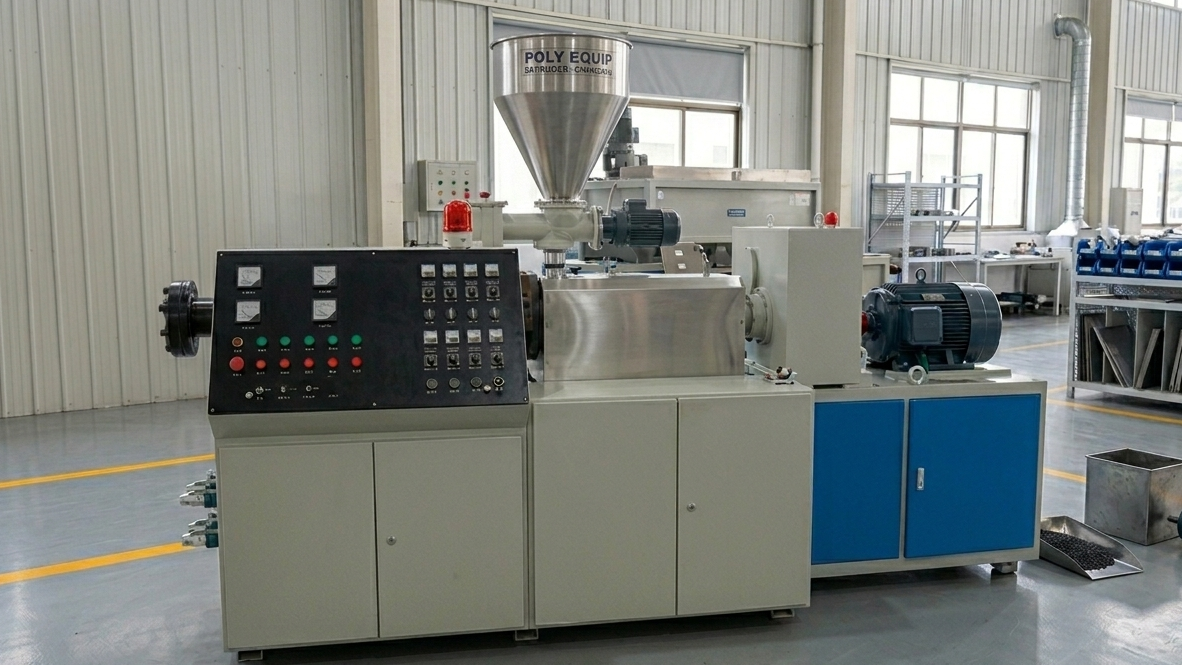
A basic single-layer PP or PS sheet line with moderate output sits on the lower end. A high-output PET sheet line with twin screw extruder, automatic feeding, degassing system, and inline thermoforming compatibility can easily move toward the higher end.
Some buyers are surprised by this spread. But once you break down what goes into the system, it starts to make sense.
Why material changes the price dramatically
In our factory, the first factor we look at is always the material.
PET, especially when used for thermoforming sheets, requires more precise temperature control and stronger plasticizing ability. If recycled PET is involved, the system becomes more complex. You need better filtration, vacuum degassing, and a more robust screw design.
Compared to that, a PP or PS sheet line with virgin material is much simpler to handle. The machine design is less demanding, and the cost reflects that.
This is why two sheet extrusion lines with similar output can have very different price levels. The material decides the engineering behind the machine.
Output capacity is not just about size
Another factor that directly affects cost is output.
Higher capacity means larger extruders, stronger gearboxes, more powerful motors, and more precise control systems. But in 2026, buyers are paying more attention to effective output, not just theoretical capacity.
We’ve seen customers choose lower-cost machines with high claimed output, only to find that they cannot run stably at that level. In practice, their real production ends up lower than expected.
From our perspective, a well-designed line that runs steadily at its target output is always more valuable than a cheaper machine that struggles to maintain consistency.
Configuration is where the real difference lies
If you walk through different workshops in Jiaozhou, many extrusion lines may appear similar at first glance. But once you look into the details, the differences become clear.
The quality of the screw and barrel, the stability of the temperature control system, the design of the die head, and the cooling structure all play a role in final performance.
For example, in sheet production, thickness uniformity is critical. A well-designed die head and precise control system can significantly reduce adjustment time and material waste.
These details are not always obvious in a quotation, but they are often the reason behind price differences.
Automation and labor cost considerations
In recent years, more buyers are asking for higher levels of automation.
Automatic feeding systems, gravimetric dosing, online thickness measurement, and even integration with thermoforming lines are becoming more common. These features increase the initial investment, but they also reduce labor dependency and improve consistency.
In 2026, this is especially relevant for buyers in regions where labor costs are rising or skilled operators are difficult to find.
From what we see, many customers are now balancing initial cost with long-term operational efficiency.
The hidden costs buyers often overlook
When discussing the price of a plastic sheet extrusion line, it’s easy to focus only on the machine itself.
But there are other costs that should be considered early.
Shipping and installation, power consumption, raw material waste during startup, and operator training all contribute to the total investment. A cheaper machine that consumes more energy or produces more waste can become more expensive over time.
We’ve had customers come back to us after experiencing these issues, realizing that the lowest quotation was not the most economical choice.
What buyers are really paying for
From a Jiaozhou factory’s perspective, the cost of an extrusion line is not just about steel and components.
It reflects design experience, manufacturing quality, and how well the system fits your actual production needs.
Two machines can produce sheets, but only one may do it smoothly, consistently, and with minimal downtime.
That difference is where the real value lies.
Final thoughts
In 2026, the cost of a plastic sheet extrusion line is best understood as a range shaped by your product, material, output expectations, and level of automation.
Instead of asking “What is the cheapest option?”, a better question is “What configuration will run reliably for my application?”
From our experience in Jiaozhou, projects that start with a clear understanding of real production needs tend to achieve better long-term results.
FAQ
1. What is the average cost of a plastic sheet extrusion line in 2026?
Most projects fall between USD 80,000 and USD 450,000, depending on material, output, and configuration.
2. Why is a PET sheet extrusion line more expensive than a PP line?
PET requires more precise temperature control, stronger plasticizing, and often additional systems like degassing and filtration.
3. Does higher price always mean better quality?
Not always, but extremely low prices often indicate simplified configurations that may affect long-term stability.
4. How can I reduce the cost of an extrusion line?
By choosing a configuration that matches your actual needs, avoiding unnecessary features while ensuring core performance is not compromised.
5. Are automation features worth the extra cost?
In many cases, yes. They can improve consistency, reduce labor requirements, and lower long-term operational costs.
 What Buyers Really Care About
 What Is the Cost of a Plastic
 What Is the ROI of a PET Sheet