If you’ve been searching for PET sheet extrusion lines, you’ve probably noticed something confusing: prices vary wildly. One supplier quotes $80,000, another asks for $300,000, and European brands can go even higher. So what’s the real number?
From the perspective of a Chinese plastic machinery factory, the honest answer is simple: the price of a PET sheet extrusion line is not a fixed number — it’s a range shaped by configuration, expectations, and long-term goals.
Understanding the Real Price Range
In today’s market, a standard PET sheet extrusion line from China typically falls between $90,000 and $250,000. That’s a wide range, but it reflects real differences—not just in quality, but in how the line is designed to perform over time.
At the lower end, you’ll find basic single-layer lines with moderate output, usually suitable for small factories or startups testing the market. These machines can run, but they often rely heavily on operator experience and may require frequent adjustments.
Move toward the middle range, and things start to change. You get more stable extrusion, better temperature control, and components from more reliable brands. Output becomes consistent, scrap rates drop, and the machine begins to feel less like a “project” and more like a production tool.
At the higher end of Chinese manufacturing, the gap with European machines narrows significantly. Multi-layer co-extrusion, automatic feeding systems, online thickness control, and energy-efficient designs become standard. For many overseas buyers, this is the sweet spot—a balance between cost and industrial reliability.
Why Prices Differ So Much
Many buyers initially assume the price difference comes from profit margins. In reality, it’s mostly about configuration.
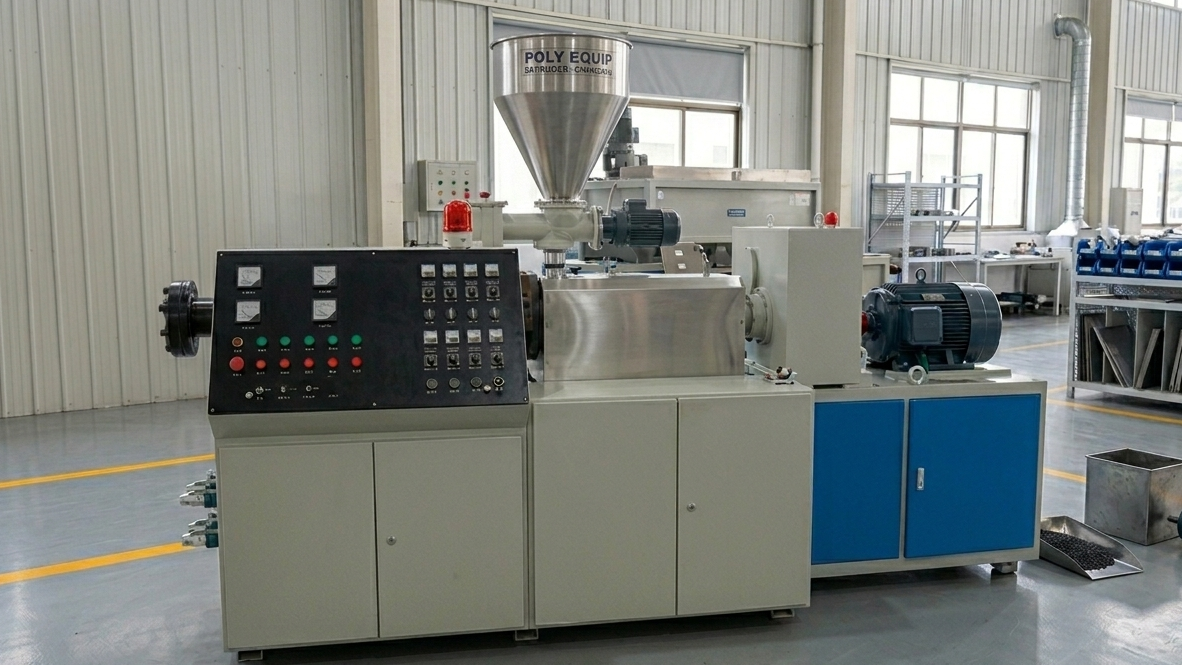
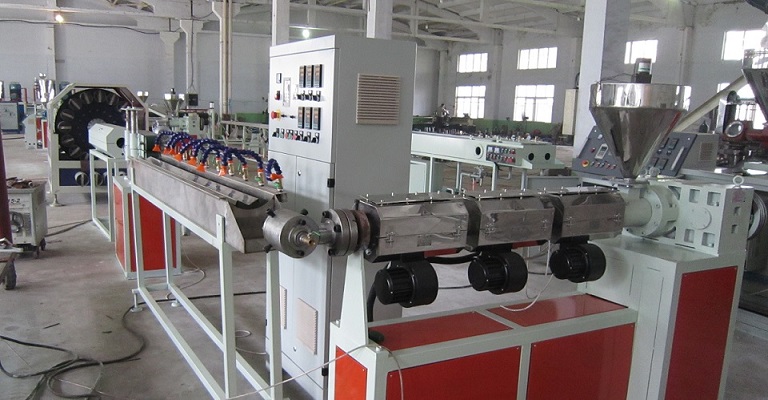
A PET sheet extrusion line is not a single machine—it’s a system. The extruder, screw design, T-die, calender system, cooling rollers, and even small details like motors and electrical components all influence the final price.
For example, a locally made gearbox and a European-brand gearbox may look similar on paper, but their lifespan and stability under continuous operation can be very different. The same goes for control systems: a basic setup might require manual tuning, while a more advanced system can maintain thickness automatically.
Another major factor is output capacity. A line producing 200 kg/h is not simply “half the price” of a 400 kg/h line. Higher output requires stronger motors, better cooling systems, and more precise control—costs increase nonlinearly.
The Hidden Cost Buyers Often Miss
One of the most common mistakes buyers make is focusing only on the initial purchase price.
From a factory perspective, we’ve seen many cases where a cheaper line ends up costing more over time. Frequent downtime, inconsistent sheet quality, and high energy consumption can quietly eat into profits.
For example, if your line produces uneven thickness, your downstream thermoforming process becomes unstable. That leads to higher rejection rates and customer complaints—costs that don’t appear in the original quotation.
This is why experienced buyers often ask a different question:
“How much does this machine cost per ton of stable production?”
That’s where higher-quality configurations start to make sense.
Chinese Machines vs European Brands
There’s always a comparison between Chinese and European PET sheet extrusion lines.
European machines are known for precision, automation, and long-term stability—but they often come with a price tag of $400,000 to $800,000 or more.
Chinese manufacturers, on the other hand, have spent the last decade closing the gap. Today, many factories can offer 80–90% of the performance at a much lower cost. The key difference is not just technology, but also standardization and consistency.
From our experience, buyers who clearly define their product requirements—sheet thickness, materials (APET, PETG, RPET), and end-use—are much more likely to find a Chinese solution that meets their needs without overpaying.
So, What Should You Budget?
If you’re planning to invest in a PET sheet extrusion line, a practical budget guideline would be:
- Around $100,000 for entry-level production
- Around $150,000–$200,000 for stable commercial production
- Above $220,000 for high-output, automated, or multi-layer lines
The key is not to chase the lowest price, but to match the machine to your business stage.
From where we stand as a Chinese manufacturer, the biggest difference between a successful project and a failed one is not the machine itself—it’s whether the buyer truly understands what they need.
A PET sheet extrusion line is not just equipment. It’s the foundation of your production.
Choosing the right one means thinking beyond the quotation and looking at the full picture: materials, market positioning, and long-term operating costs.
FAQ
Q1: What is the average cost of a PET sheet extrusion line?
Most Chinese PET sheet extrusion lines range between $90,000 and $250,000, depending on configuration and output.
Q2: Why are some PET extrusion lines much cheaper than others?
Lower prices usually mean simpler configurations, lower-grade components, and less automation, which can affect long-term performance.
Q3: Is it worth buying a high-end PET sheet extrusion line?
If you require stable, high-volume production with low scrap rates, a higher-end configuration often delivers better ROI over time.
Q4: How does output capacity affect price?
Higher output requires stronger motors, better cooling, and more precise control systems, which significantly increase cost.
Q5: Can Chinese PET extrusion lines match European quality?
In many cases, Chinese machines can achieve 80–90% of European performance at a much lower price, especially in mid-to-high configurations.

 How to Avoid Common Mistakes W
 What Buyers Really Care About
 Twin Screw vs Single Screw Ext
 Plastic Extrusion Line Price G