
How to Choose the Right Plastic Extrusion Line for Your Factory?
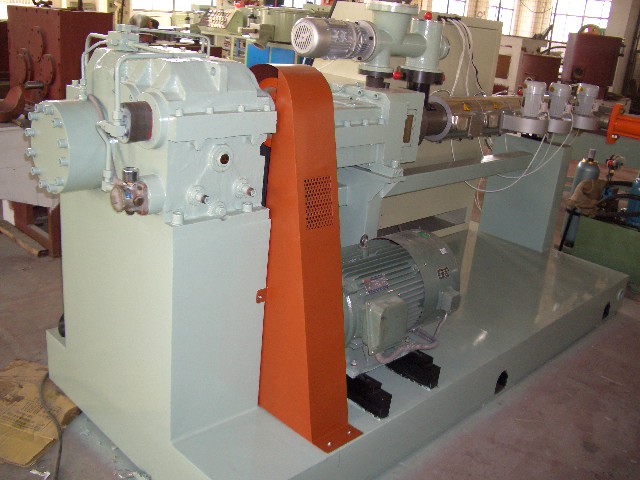
In Jiaozhou, plastic extrusion is not a new industry. Around this area, dozens of factories—large and small—have been building extrusion lines for years. Some focus on sheet, some on pipe, some on profiles. From the outside, many machines look similar. Stainless steel covers, standard layouts, familiar components.
But when customers start production, the differences show quickly.
We’ve worked with buyers who came back to us after trying lower-priced options elsewhere. Not because those machines couldn’t run, but because they couldn’t run consistently. That’s usually where the real cost begins.
Choosing the right plastic extrusion line is less about comparing catalogs and more about understanding how your production will actually run day after day.
Your product decides everything
When overseas buyers contact us, the first question we ask is not about output or budget. It’s always about the product.
A PET sheet line for thermoforming trays is very different from a PP sheet line for industrial applications. Even within the same material, thickness, transparency requirements, and final usage can change the entire configuration.
In Jiaozhou, many smaller workshops assemble machines based on standard templates. That works for simple applications. But once your product has specific requirements—high clarity, multi-layer structure, recycled content—the standard solution often starts to struggle.
We’ve learned that the more clearly a customer defines their product at the beginning, the smoother the project goes later.
Material reality vs. theoretical design
On paper, most extrusion lines are designed for ideal conditions. In reality, materials are rarely ideal.
Many of our customers today are working with recycled PET or mixed raw materials. This changes everything. Viscosity fluctuates, impurities appear, and stability becomes harder to maintain.
In these cases, a stronger plasticizing system and better filtration are not optional. They are necessary.
Some buyers try to reduce initial investment by choosing a simpler configuration. From our experience, that decision often leads to higher production losses later—more waste, more downtime, and more operator intervention.
A well-matched extrusion line should reflect your actual material conditions, not just the standard specification.
Stable production matters more than maximum output
In conversations with buyers, output is always a key topic. Everyone wants higher capacity.
But in real factory operation, stability is more valuable than peak performance.
A machine that can run continuously at 85–90% of its rated capacity is far more profitable than one that reaches high output briefly but requires constant adjustment.
We’ve seen lines from different suppliers with similar specifications perform very differently in actual production. The difference usually comes from internal design details—screw structure, temperature control precision, die head quality.
These are not always visible in quotations, but they define your daily production experience.
The difference is in the details
From the outside, many extrusion lines built in Jiaozhou may look almost identical. But inside, the engineering approach can vary significantly.
For example, in sheet extrusion, die head design directly affects thickness uniformity. Cooling system design influences surface quality and internal stress. Even small differences in heating control can impact long-term stability.
This is why experienced buyers tend to ask deeper questions. Not just “what is the price,” but “how is this system designed, and why?”
A reliable supplier should be able to answer that clearly, without avoiding technical details.
Matching the machine to your team
Another factor that is often overlooked is the operator.
Some extrusion lines are designed for experienced technicians. Others are optimized for easier operation and faster learning.
If your factory is new to extrusion, choosing a slightly more stable and user-friendly system can make a big difference during the first months of production.
In Jiaozhou, we’ve seen cases where the machine itself was not the problem, but the lack of proper training led to inconsistent results. That’s why we now put more emphasis on installation guidance and operator training, especially for first-time buyers.
After-sales support is part of the machine
From a factory perspective, selling a machine is only the beginning.
Extrusion lines are long-term production assets. Over time, adjustments, maintenance, and occasional troubleshooting are unavoidable.
When customers evaluate suppliers in Jiaozhou, the real difference often becomes clear after installation. How quickly can issues be diagnosed? Is communication efficient? Are spare parts available?
These factors don’t appear in quotations, but they directly affect your production continuity.
Final thoughts
From our experience as a Jiaozhou manufacturer, the most successful projects are not the ones with the lowest price, but the ones with the best alignment.
When the product requirement, raw material, machine configuration, and operator capability are all considered together, the extrusion line becomes stable and predictable.
That stability is what creates profit.
If you’re planning to invest in a plastic extrusion line, it’s worth spending more time in the early stage to define your real needs. It makes the entire process—from manufacturing to installation to production—much smoother.
FAQ
1. Why do extrusion lines from different suppliers look similar but perform differently?
Because the key differences are inside the machine—screw design, temperature control, and die head structure. These details affect long-term stability.
2. Is it safe to choose a lower-cost extrusion line from smaller factories?
It depends on your application. For simple products, it may work. For higher requirements, inconsistent performance can increase long-term costs.
3. How important is raw material when selecting an extrusion line?
Very important. Recycled or mixed materials require stronger processing capability and better filtration systems.
4. What should I prioritize: output or stability?
Stable output is more important for long-term profitability. High peak capacity is less useful if it cannot be maintained.
5. Do Jiaozhou factories provide installation and training support?
Most experienced manufacturers do. It’s important to confirm this before placing an order.
 How to Choose the Right Plasti
 China vs Europe Extrusion Line