When buyers ask about the return on investment of a PET sheet extrusion line, they are usually not looking for a theoretical number. They want to understand how fast the machine can start generating stable profit, and what risks may delay that moment. From our experience working with overseas buyers, ROI is less about a fixed percentage and more about how well the line matches the buyer’s actual production and market conditions.
In simple terms, ROI comes from the balance between investment cost and the value created by continuous production. A PET sheet extrusion line is not just a machine—it is a long-term production system. The real return depends on how efficiently it converts raw materials into sellable sheets, how stable the output quality is, and how well it fits into your downstream applications such as thermoforming or packaging.
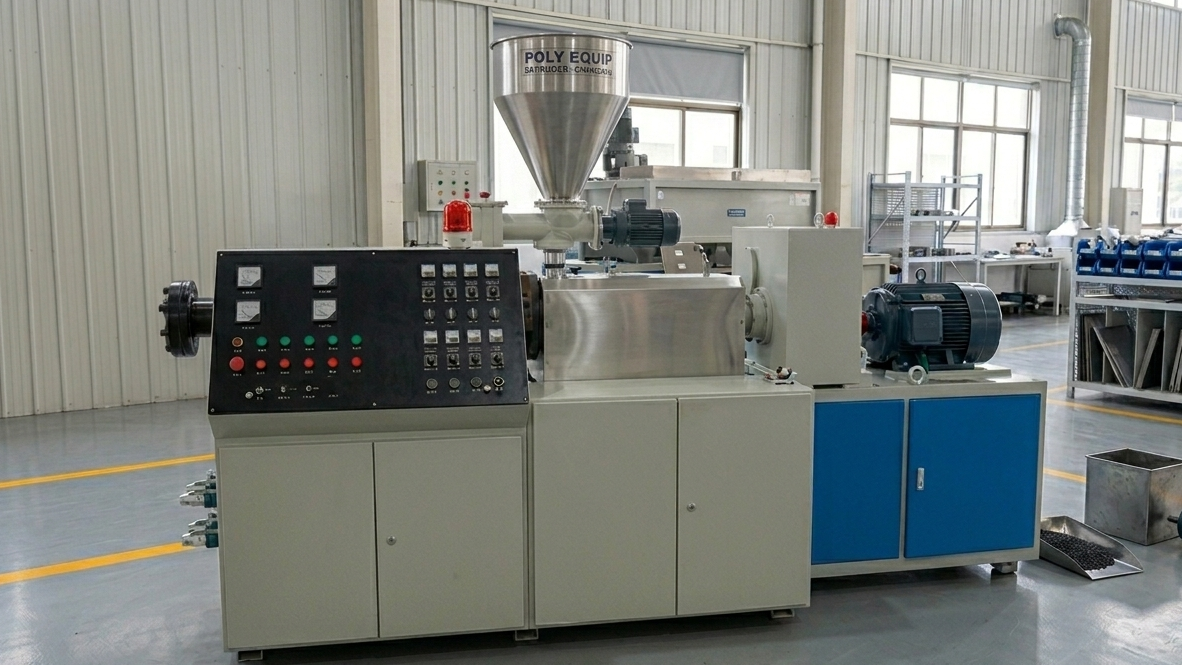
One of the first factors affecting ROI is the initial investment structure. Many buyers focus only on the machine price, but that is only part of the picture. A complete PET sheet line includes the extruder, die head, calendar system, cooling section, and sometimes crystallization and drying units. If the configuration is too basic, the buyer may save money upfront but lose consistency in production. On the other hand, over-specifying the line for a modest production target can unnecessarily extend the payback period.
From what we see in real projects, a well-balanced configuration often pays back faster than the cheapest option.
Production capacity is where ROI becomes more visible. A line running steadily at designed output can dilute fixed costs very quickly. However, many buyers overestimate the practical output they can achieve. Laboratory data or maximum capacity on paper does not always reflect real factory conditions. Material quality, operator experience, and maintenance discipline all influence actual throughput. A line that runs at 85% stability every day is usually more profitable than one that occasionally reaches peak output but frequently stops.
Material cost also plays a major role. PET sheet production is sensitive to raw material fluctuations, especially when using recycled PET (rPET). A line that can handle a higher percentage of recycled material without compromising sheet quality creates a clear advantage. In many markets, this directly improves margins because recycled material is cheaper and increasingly preferred by end customers.
Energy consumption is another hidden variable that buyers sometimes underestimate. Modern extrusion lines with optimized screw design and efficient heating systems can significantly reduce electricity costs over time. While the difference per hour may seem small, it accumulates quickly when the line operates continuously.
Labor and operational simplicity also affect ROI more than expected. A line that requires constant manual adjustment increases both labor cost and production risk. In contrast, a stable and user-friendly system allows fewer operators to manage the process while maintaining consistent quality. For many overseas buyers, especially those entering extrusion for the first time, this can make a critical difference.
Downtime is where ROI calculations often fail. On paper, the numbers look attractive, but frequent stoppages due to poor component quality, unstable temperature control, or inconsistent raw material feeding can delay the return significantly. This is why experienced buyers pay attention not only to specifications but also to the reliability of key components and after-sales support.
From a market perspective, ROI is also tied to what you produce with the PET sheet. Packaging for food, medical trays, and thermoforming applications all have different margin structures. A line producing standard sheets for low-end applications may require a longer payback period compared to a line supplying higher-value packaging segments.
In real export cases we have handled, a typical PET sheet extrusion line can reach a payback period of around one to two years under stable operation. However, this is not a guarantee. Projects with strong market demand, good material sourcing, and disciplined production management can recover investment faster, while poorly planned setups may take significantly longer.
For buyers evaluating ROI, the key is not to chase the lowest price or the highest output, but to build a system that can run consistently, match your market, and scale with your business.
A reliable PET sheet extrusion line should not only produce sheets, but also produce predictable results. That is where real ROI comes from.
FAQ
1. How long does it usually take to recover the investment in a PET sheet extrusion line?
In most practical cases, the payback period ranges from 12 to 24 months. This depends heavily on production stability, material cost, and the selling price of the final product.
2. Does using recycled PET improve ROI?
Yes, if the line is properly designed for rPET processing. Using recycled material can significantly reduce raw material costs, but only if sheet quality remains acceptable for your market.
3. Is a higher output machine always better for ROI?
Not necessarily. If your market demand cannot absorb the output, or if the machine cannot run stably at high capacity, the actual return may be lower.
4. What is the biggest risk affecting ROI?
Unstable production is the most common issue. Frequent downtime, inconsistent quality, and lack of proper maintenance can quickly reduce profitability.
5. How important is after-sales support in ROI calculation?
Very important. Fast technical support and spare parts availability can reduce downtime and protect your production schedule, directly impacting your return.

 What Buyers Really Care About
 What Is the Cost of a Plastic
 What Is the ROI of a PET Sheet