
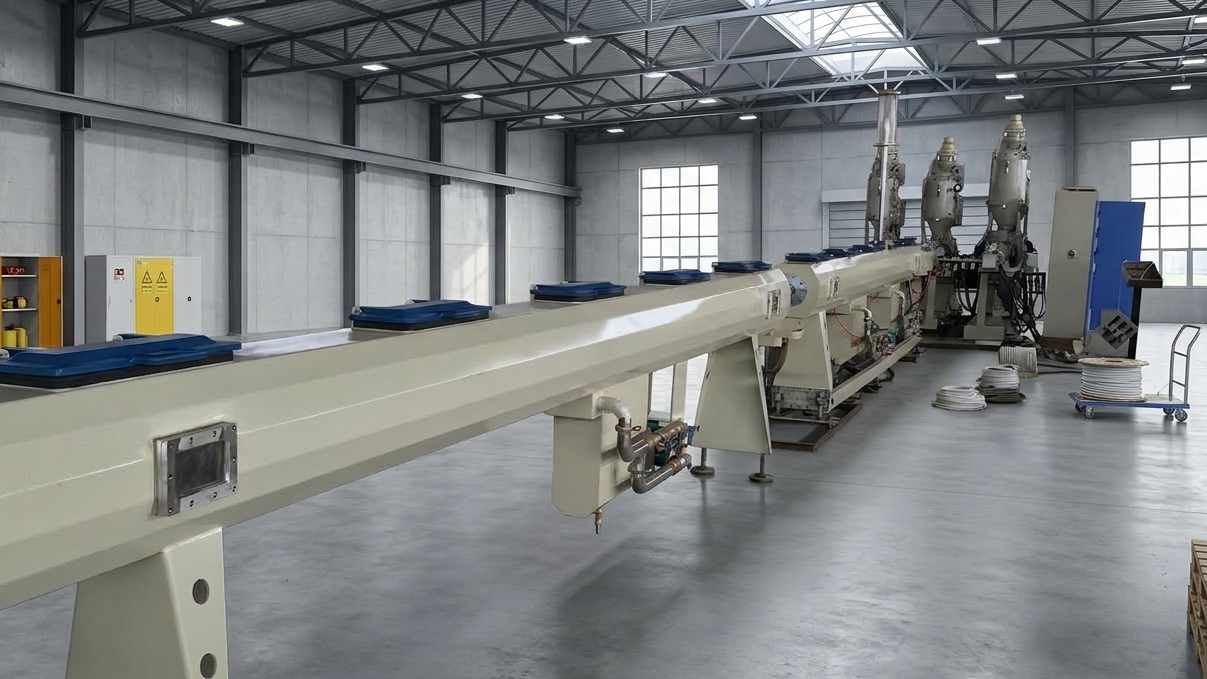
HDPE Water Supply & Gas Pipe Extrusion line
HDPE Pipe Extrusion Line for Water, Gas and Cable Protection
HDPE pipe extrusion lines are widely used in infrastructure projects where durability and long service life are required. Typical applications include agricultural irrigation systems, building water supply, gas distribution networks, and protective conduits for telecommunication cables.
Instead of focusing only on machine specifications, experienced buyers usually pay attention to production stability, automation level, and long-term reliability. A well-designed extrusion line should run continuously with minimal manual intervention while maintaining consistent pipe quality.
How the HDPE Pipe Production Line Works
A complete HDPE pipe extrusion system is a coordinated production process rather than a single machine. It generally includes:
High-efficiency single screw extruder
Spiral die head for melt distribution
Vacuum calibration tank for pipe shaping
Cooling tanks for temperature control
Haul-off unit for stable pulling
Cutting system and stacking unit
Each unit plays a critical role in ensuring dimensional accuracy and surface quality.
Key Features Explained (What Actually Matters to Buyers)
One of the most important components is the single screw extruder, typically designed with a longer L/D ratio. This allows better melting performance and more uniform plasticization, which directly affects pipe strength and consistency. In practical production, this also means fewer defects and more stable output.
The die head design, often spiral type, ensures even material distribution. This is especially important for larger diameter pipes, where uneven flow can lead to thickness variation.
Cooling is another critical factor. Modern lines use vacuum calibration combined with circulating water cooling systems, allowing fast shaping and efficient heat removal. Stable temperature control helps prevent deformation and improves overall pipe quality.
For pulling systems, manufacturers usually offer different caterpillar haul-off configurations (2 to 12 tracks). The choice depends on pipe diameter and required traction force.
Cutting systems can vary as well. Depending on production requirements, you may choose:
Chipless cutting for clean pipe ends
Saw cutting for flexibility
Planetary cutting for larger diameters
Why Production Stability Matters More Than Specs
In real factory conditions, nominal parameters like output or power are not the only concern. What truly matters is whether the line can maintain stable operation over long hours.
A well-configured HDPE extrusion line should deliver:
Consistent wall thickness
Smooth inner and outer pipe surfaces
Minimal downtime during continuous production
Final Pipe Performance
Pipes produced by a properly configured HDPE extrusion line typically offer a strong balance between rigidity and flexibility. They are resistant to heat, aging, and environmental stress, making them suitable for long-term outdoor and underground applications.
| Model | Suitable Pipe Range | Typical Output | Recommended Application | Key Advantage |
|---|---|---|---|---|
| QP65/30 | Small pipes (16–63mm) | ~100 kg/h | Drip irrigation, small water supply | Energy saving, easy operation |
| QP65/33 | 20–110mm | 150–180 kg/h | Building water systems | Stable output, compact design |
| QP75/33 | 63–160mm | ~220 kg/h | Medium-size pipelines | Balanced performance |
| QPS90/33 | 160–400mm | ~450 kg/h | Municipal water supply | High capacity, stable extrusion |
| QP120/33 | 355–630mm | ~800 kg/h | Large infrastructure | High efficiency cooling system |
| QP150/33 | 400–800mm | ~1000 kg/h | Industrial pipelines | Strong traction system |
| QP150/33 (Large) | 800–1600mm | 1200–1400 kg/h | Mega projects / gas pipelines | Maximum output, heavy-duty design |
Related PRODUCTS
-
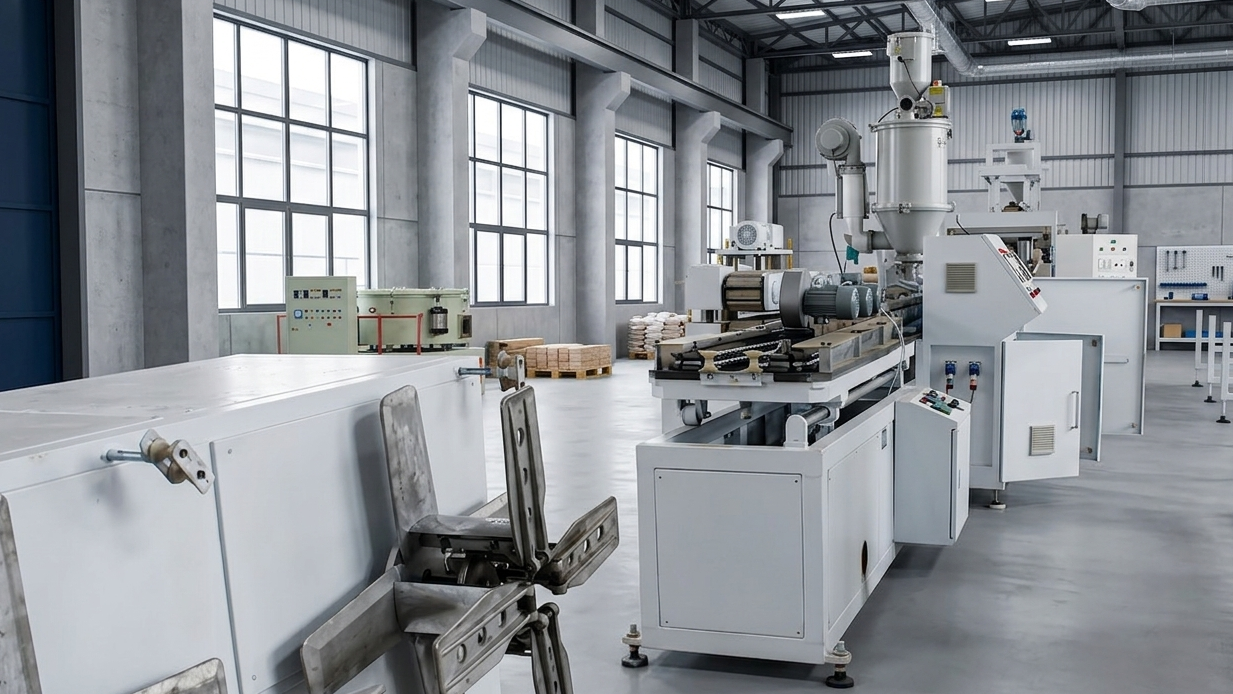
PVC / PE / PP Single-Wall Corrugated Pip
-

PPR Three Layers Fiber Glass Reinforced
-
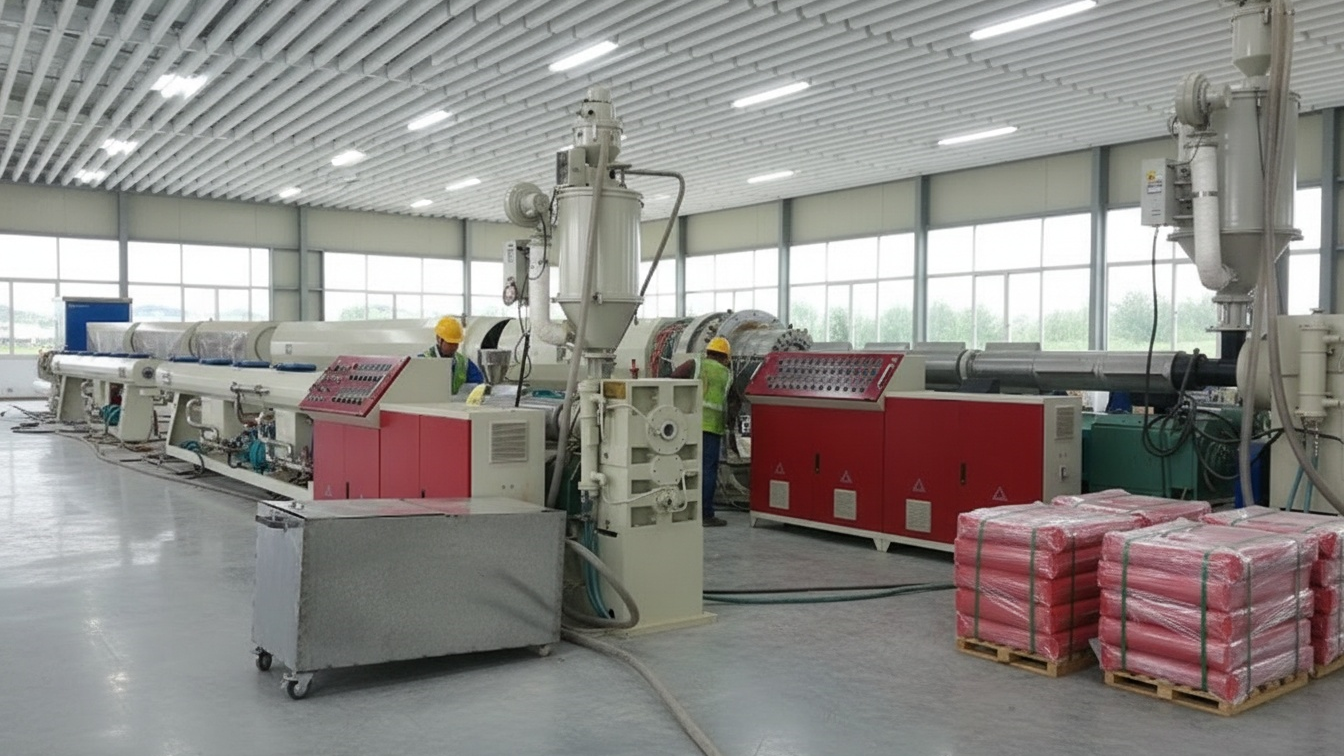
HDPE Water Supply & Gas Pipe Extrusi
-
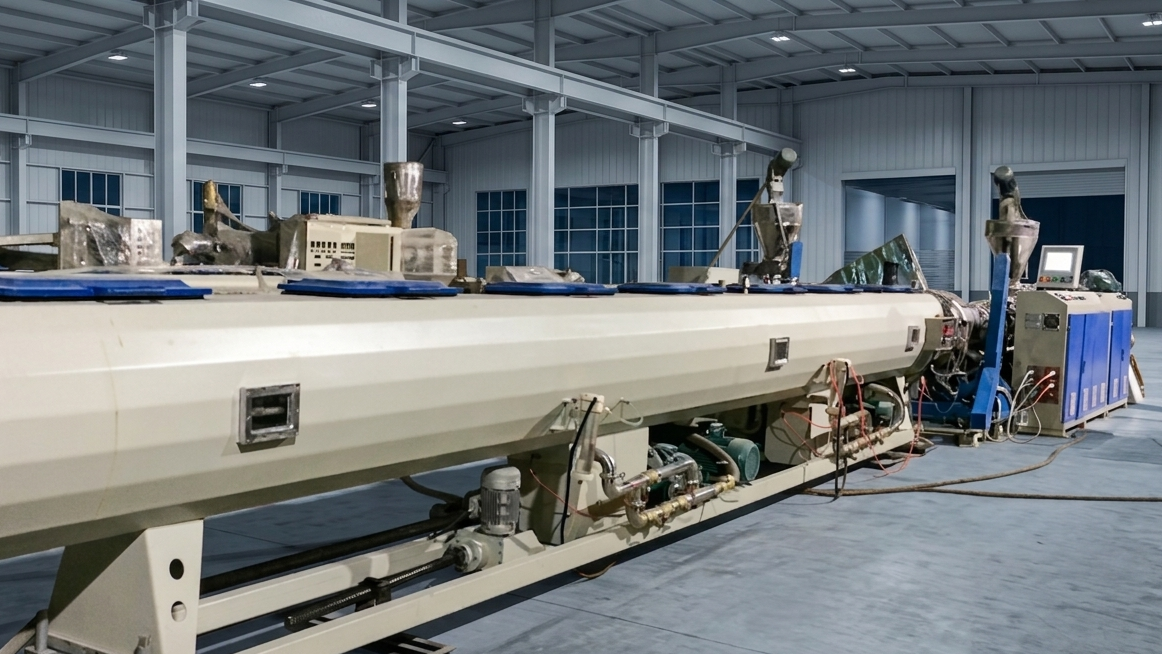
PVC Water Supply & Drainage Pipe Ext
-
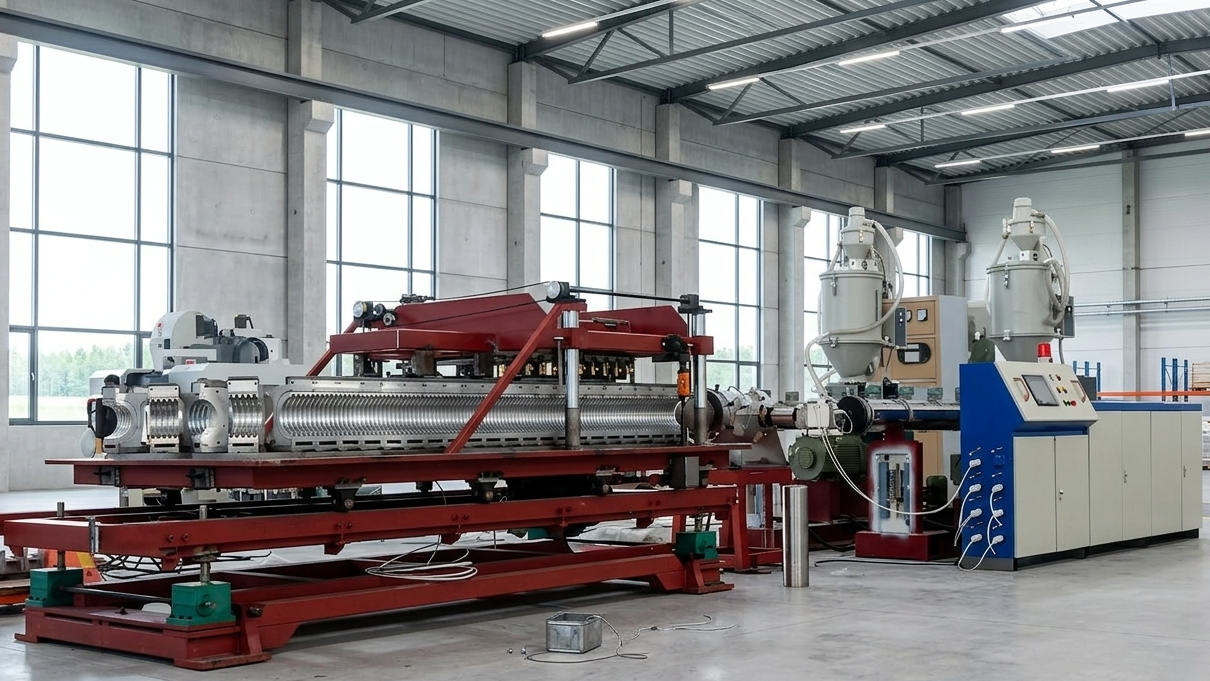
HDPE / PVC Double-Wall Corrugated Pipe E
-
PPR Hot & Cold Water Pipe Extrusion
-

HDPE Large-Diameter Hollow Wall Winding
-

PVC Steel Wire Reinforced Hose Extrusion
-

PVC Fiber Reinfoced Hose Extrusion Line
-

HDPE Carbon Spiral Refinforced Pipe Prod